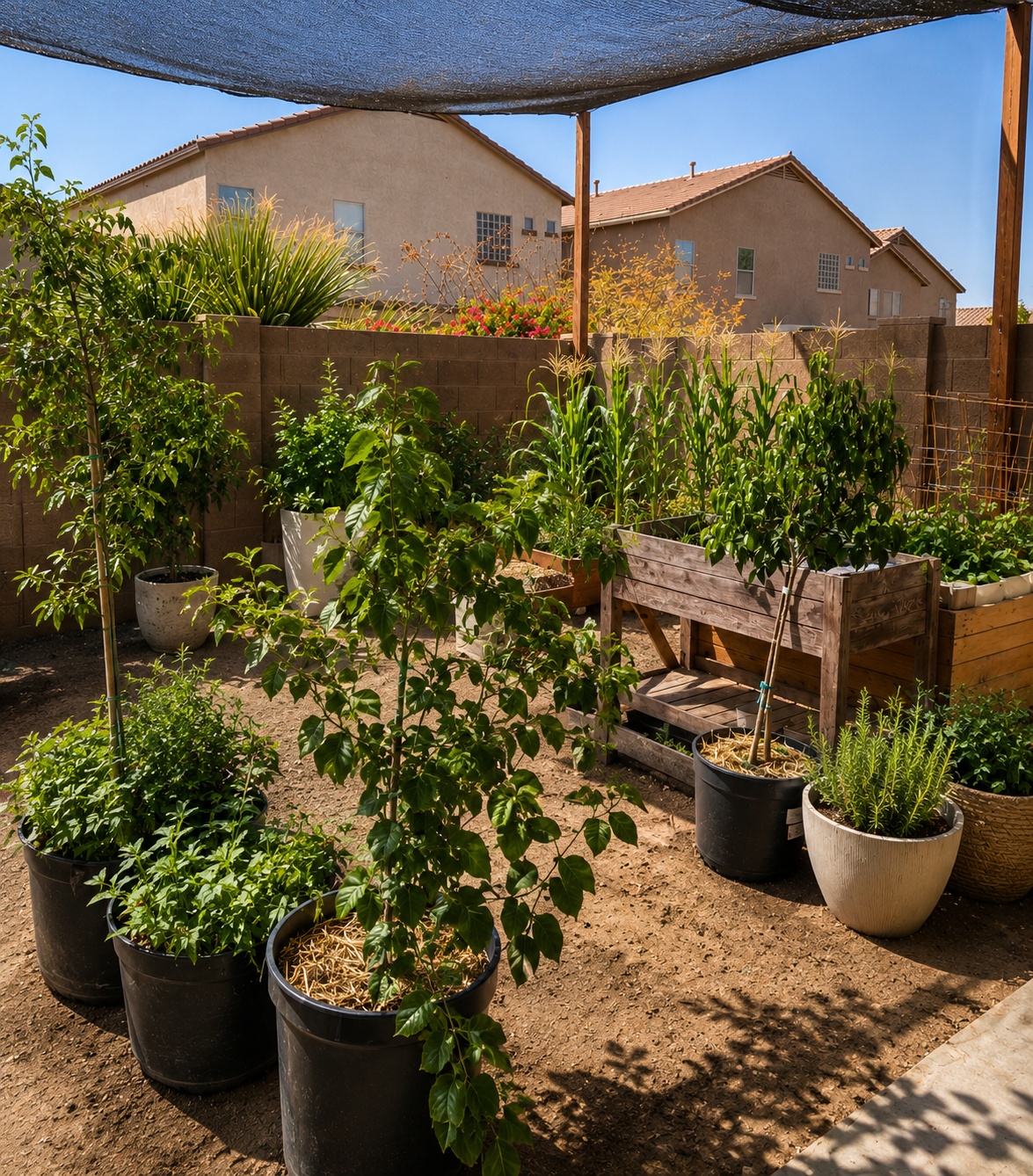
Why Backyard Food Forests & Kitchen Gardens Are Having a Moment
For a long time, landscaping and growing food have often been treated as two separate things.
But a backyard can be so much more than something that simply looks finished.
It can be beautiful and productive, growing herbs you actually cook with, fruit, vegetables, and plants that support bees, butterflies, and other pollinators.
That’s part of why food forests and kitchen gardens are getting so much attention right now.
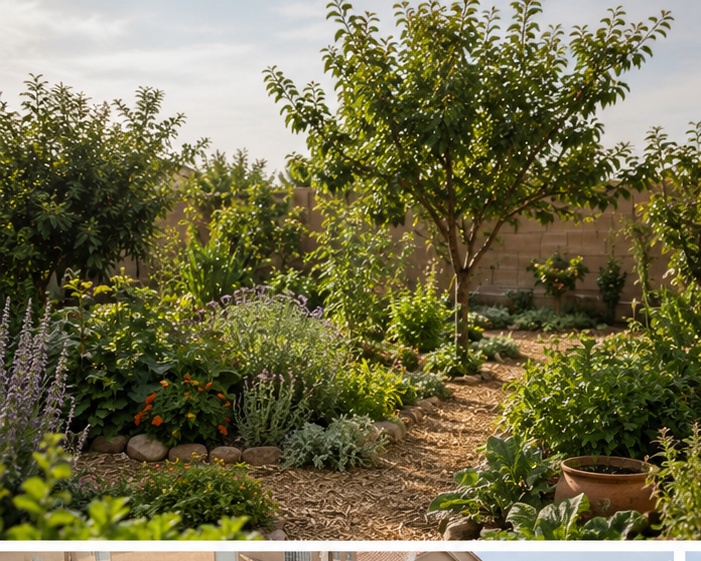
What Is a Food Forest?
A food forest is simply a way of growing food in layers instead of neat, separate rows. You might have a fruit tree, herbs underneath it, groundcover filling open space, and something climbing a nearby trellis.
You don’t need an actual forest to use the idea. It can work in a regular backyard or even a small corner of the garden. The goal is to make better use of the space you already have.
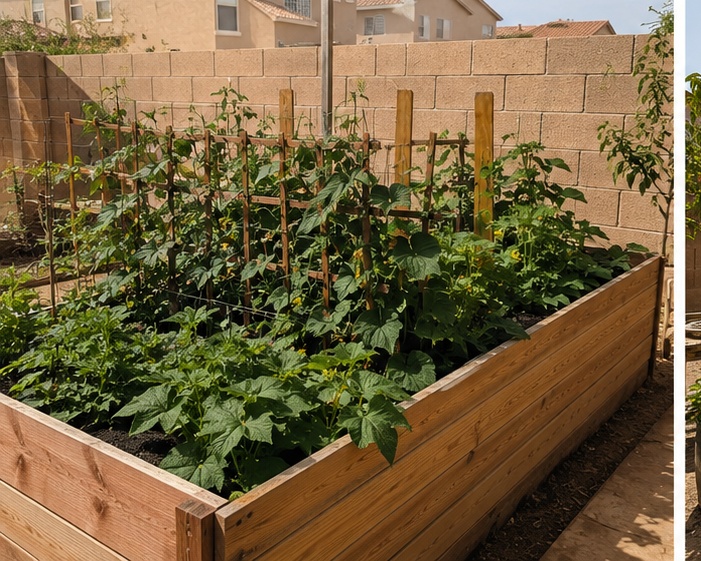
What About a Kitchen Garden?
A kitchen garden is the more familiar side of growing food at home: vegetables, herbs, berries, and flowers planted close enough to the house that you’ll actually use them.
That could mean raised beds, containers, herbs near the back door, or a small section of the yard dedicated to what you cook with most.
The real appeal is convenience. If you can step outside while making dinner and grab basil, rosemary, lettuce, tomatoes, or whatever else is ready, the garden starts to feel like an extension of the kitchen instead of a separate project.
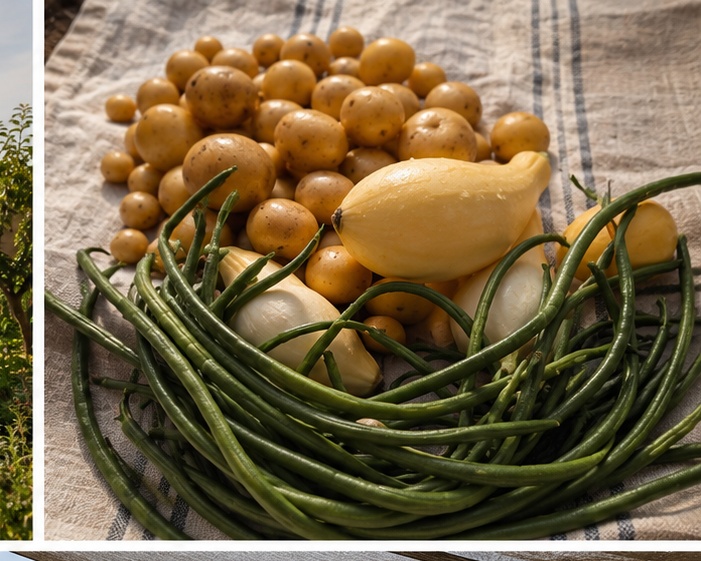
Why Now?
There are a lot of reasons people are looking at growing food at home a little differently right now. Grocery prices have gone up, recalls seem to happen all the time, and even something as simple as lettuce can suddenly become harder to trust or find.
Growing some of your own food doesn’t mean replacing the grocery store. But having herbs, greens, vegetables, berries, or fruit at home can take a little pressure off the weekly bill and give you more control over what ends up on your table.
There’s also something appealing about knowing exactly where your food came from. You know what went into the soil, what was sprayed on it or wasn’t, and you can pick it when it’s actually ready to eat.
Gardening is also a hobby, and there’s something deeply satisfying about planting a seed or tiny transplant, caring for it, watching it grow, and eventually carrying part of dinner back into the house.
Where the Two Meet
Food forests and kitchen gardens can easily overlap. You might have raised beds for the vegetables you use most, while working herbs, fruiting plants, edible groundcovers, and flowers into the rest of the yard.
A rosemary shrub can be part of the landscaping. A fig or mulberry tree can add structure, shade, and food. Nasturtiums can spill over the edge of a bed, adding color, attracting pollinators, and giving you something edible at the same time.
Edible plants don’t have to be tucked away in one designated corner. They can be part of the overall landscape and still look intentional.
Rethinking the Backyard
Here in Arizona, a lot of money goes into low-maintenance landscaping: rock, hardscape, cactus, and desert-friendly shrubs. There’s nothing wrong with that approach, but it can leave a backyard feeling more finished than lived in.
A yard can still be climate-conscious and manageable while doing more. Fruit trees, herbs, edible shrubs, groundcovers, flowers, and vegetables can all become part of the landscape instead of being treated like a separate garden.
When you start thinking about the backyard that way, it becomes less about filling space and more about creating a place that offers food, shade, pollinator habitat, or simply a reason to spend more time outside.
There’s a bigger conversation to be had about how landscaping choices affect the microclimate around a home, especially in the desert, but that deserves its own post.
For now, the point is simply that an Arizona backyard can be so much more than rocks and hardscape.
A Little More Self-Reliance
Growing some of your own food doesn’t mean becoming completely self-sufficient. For most people, that isn’t the goal. There’s simply something reassuring about knowing you have at least a few things growing right outside your door.
If you end up with more than you can use right away, freezing, preserving, or canning part of the harvest can stretch it even further.
You may already have the beginnings of this without realizing it: herbs, a fruit tree, vegetables in a raised bed, or a climbing plant on a trellis.
The goal isn’t to overhaul everything. It’s simply to see the backyard as a space that can be beautiful, productive, and capable of giving something back.
