Planning a fall garden in Arizona still feels a little strange to me.
I have lived here for almost 20 years, and somehow the seasons still do not always feel quite right. The calendar starts talking about fall while it is still over 100 degrees outside. Stores begin putting out pumpkins, people online start making soup, and I am standing in the backyard wondering whether the soil is too hot to touch.
You would think I would be used to it by now.
Still, this is exactly when the planning needs to happen.
My garden beds may not look especially exciting at the moment, but behind the scenes, I have been deciding what I want to grow, where everything will go, and which crops deserve the most space this season.
The goal is not to squeeze every vegetable imaginable into the garden. I want a layout that is productive, manageable, and realistic for our family.
This year, my biggest priorities are broccoli, cauliflower, spinach, potatoes, and sugar snap peas because those are the vegetables we are far more likely to use in everyday meals. I will still grow some kale, but only a small amount. I would rather give most of the space to food I know will actually make it into the kitchen.
I will also be growing cabbage, carrots, green onions, radishes, lettuce, Brussels sprouts, herbs, and a few flowers to soften the beds and bring in pollinators.
Of course, this is the plan before weather, pests, germination rates, and the garden itself start offering their opinions.
Planning Around the Garden I Actually Have
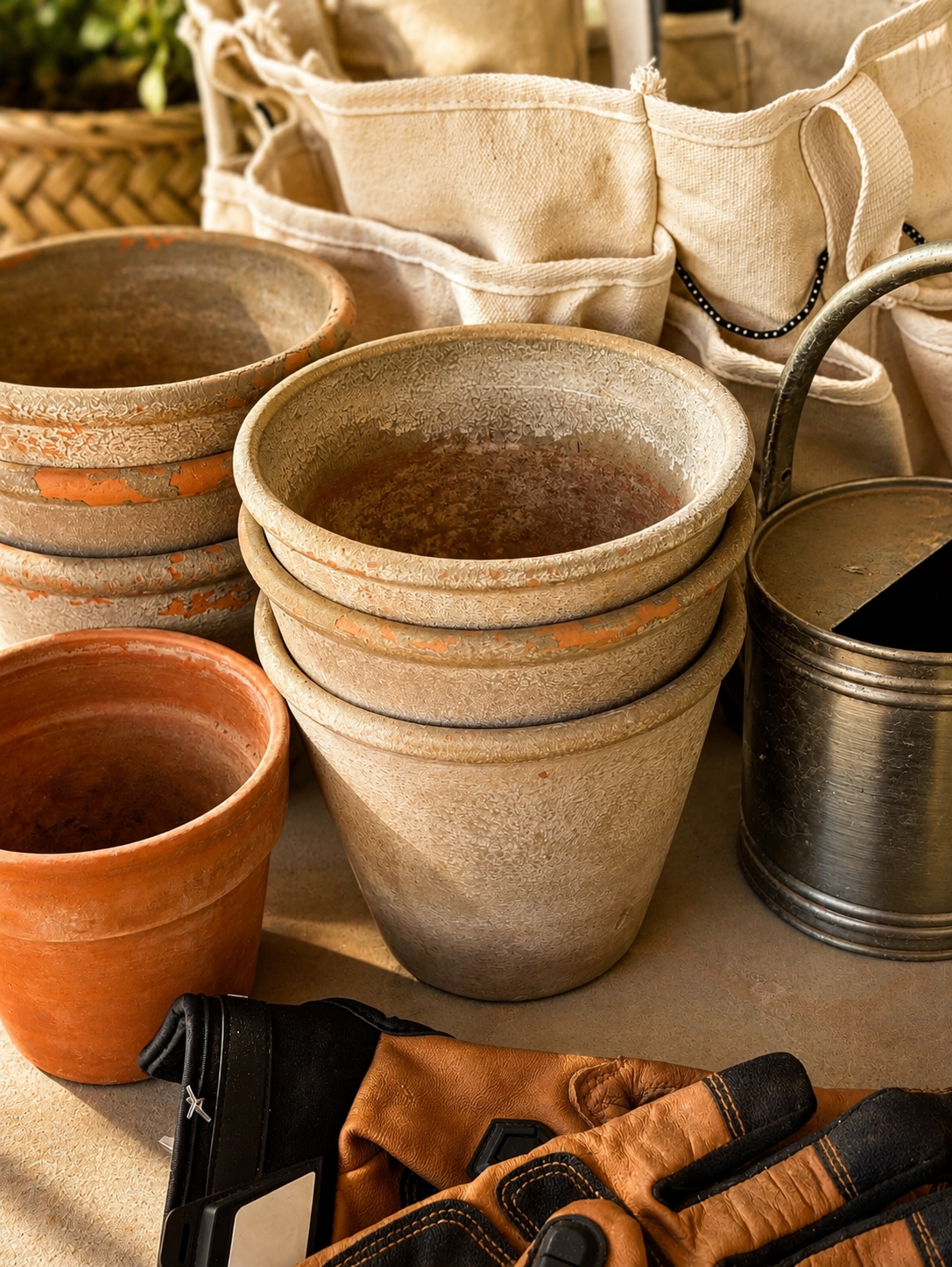
I have one large 4-by-8-foot raised bed, a U-shaped bed, a smaller elevated 2-by-4-foot bed, and a collection of pots in different sizes. It is a decent amount of growing space, but apparently not enough to stop me from wanting to plant everything I see.
So this year, I am trying to be a little more intentional about what goes where.
The large bed will hold the crops I want more of for the house, especially broccoli, cauliflower, and cabbage. The U-shaped bed will be more of a mix, with vegetables, herbs, flowers, and smaller plantings tucked in wherever they make sense. The little elevated bed will mostly be for quick-growing greens that I can harvest and plant again as the season goes on.
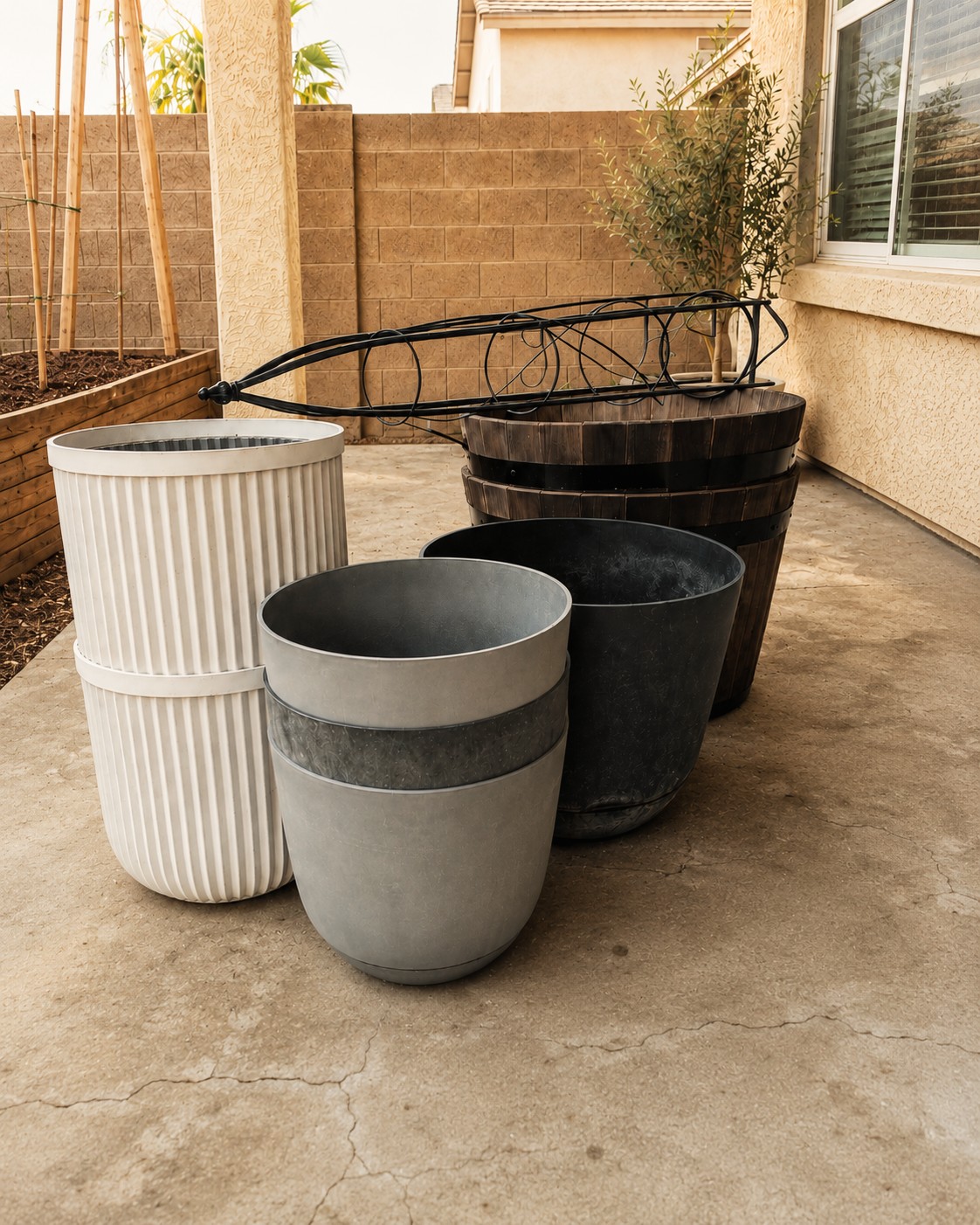
Then there are the containers, which are basically my garden’s overflow department.
I will use those for potatoes, garlic, herbs, and anything else that either needs its own space or ends up homeless after I start planting. They also give me the option to move things around when the Arizona sun becomes a little too enthusiastic—which it usually does.
If you would like to see what each of these beds looks like, you can find the full garden layout in my earlier Cultivate post about resetting the Arizona garden for fall.
I Needed to See It on Paper First
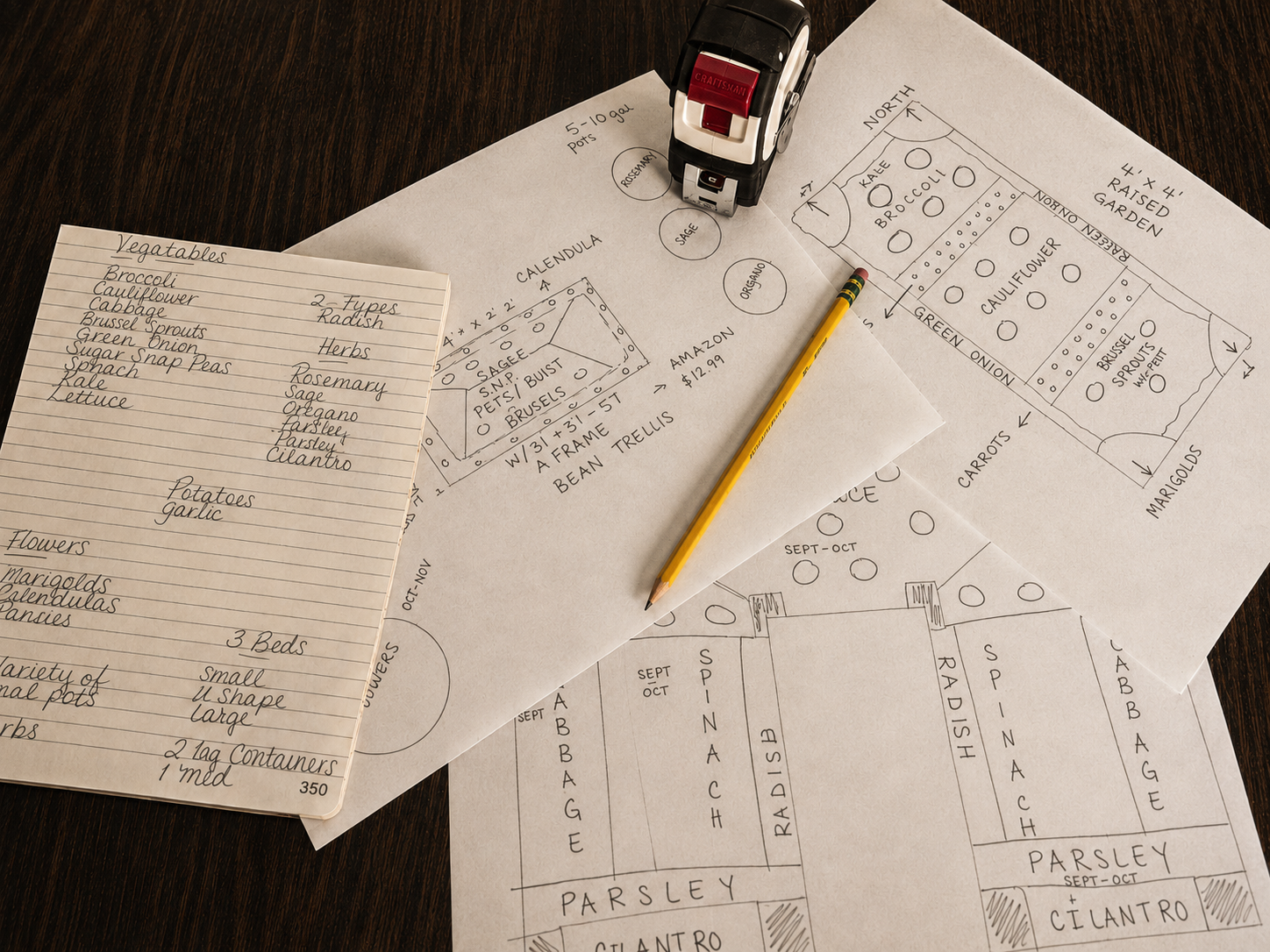
Before I settled on the layout, I drew the beds on paper using their actual measurements.
I am a visual person, and having a list of vegetables was not enough. I needed to see how much room the larger crops would take, where the trellis would make sense, and what could realistically fit without turning every bed into a crowded mess.
Drawing it out helped me organize each space before I planted anything. From there, I turned the sketch into a more detailed garden map that I can refer back to once I start sowing.
Here is the plan laid out bed by bed, based on the measurements and the space each crop will need.
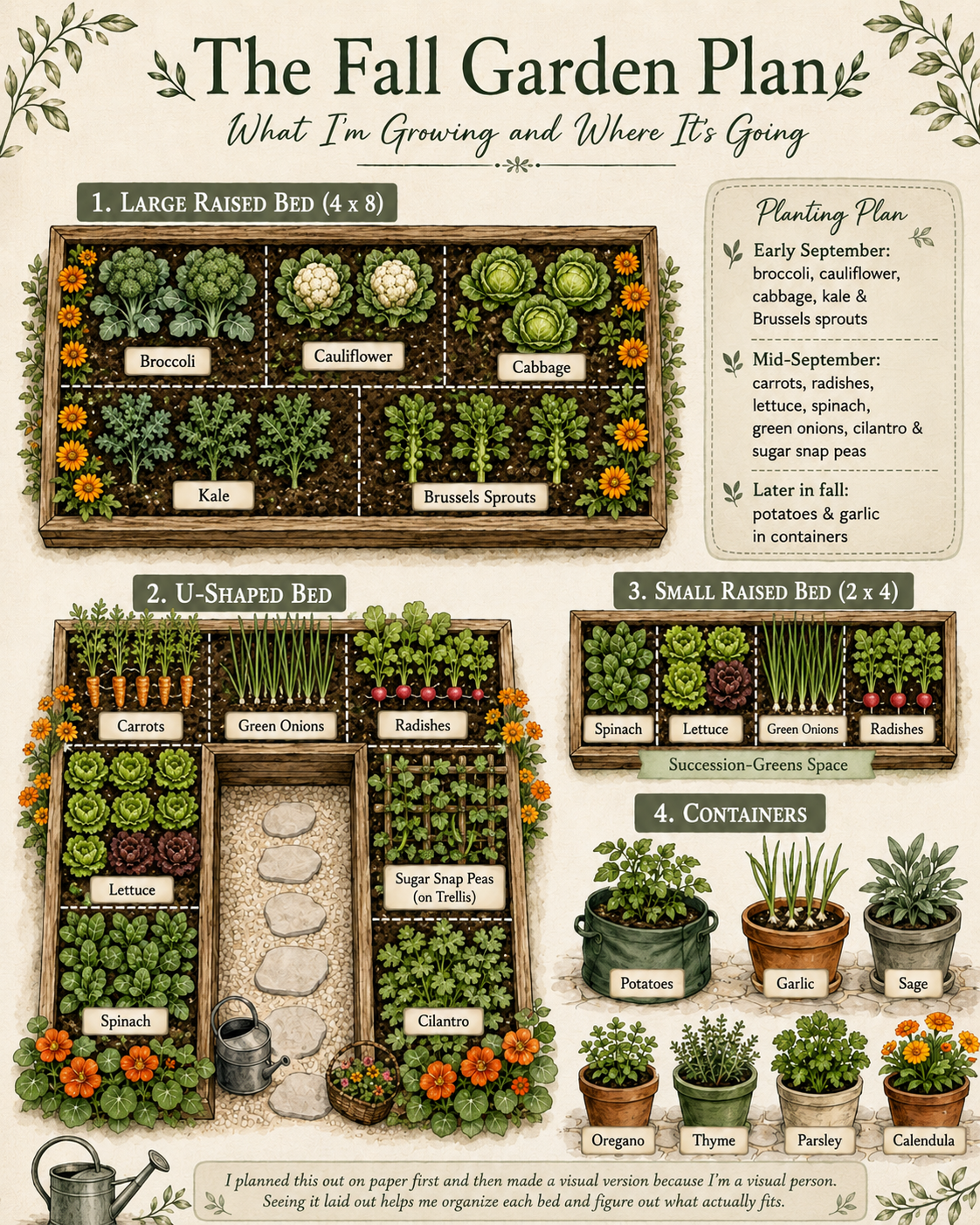
My Arizona fall garden plan, mapped out so I can see what fits where before planting begins.
The Large Raised Bed
The large raised bed is where I want to put some of the vegetables we actually eat on a regular basis, so broccoli, cauliflower, and cabbage will be the main focus here.
All three need a fair amount of room once they get going. They look small and manageable when they first come up, but those leaves spread out quickly. I am trying not to repeat my usual habit of planting everything too close together and then acting surprised when the bed turns into a crowded mess.
I will also add a small amount of kale and a couple of Brussels sprouts plants. We do eat kale occasionally, but not enough for it to take over a large part of the garden.
I am leaving a little flexibility in this bed too. That gives me room for another planting later—or somewhere to put the extra seedling I will almost certainly convince myself I can squeeze in.
The U-Shaped Bed
The U-shaped bed is where things get a little more mixed.
This is the bed where I can tuck in carrots, green onions, radishes, lettuce, spinach, cilantro, sugar snap peas, and a few flowers without needing every section to do the same job. I like having one area of the garden that feels a little less rigid and a little more like a kitchen garden.
The sugar snap peas will go along a trellis so they can grow up instead of sprawling across everything else.
Carrots and green onions can share the space well, and radishes are quick enough that I can plant them in smaller batches instead of ending up with more than we can reasonably use all at once.
Spinach and lettuce will fill the cooler sections of the bed, and cilantro can be tucked into another open area once the weather settles down.
I will add marigolds and nasturtiums around the edges for color and pollinators. I want the bed to be productive, but I also want it to look like someone enjoys being out there—not like I am running a tiny vegetable warehouse.
The Small Raised Bed
The smaller raised bed will mostly be for spinach, lettuce, and other greens that I can harvest a little at a time.
Because this bed is elevated and easy to reach, it makes sense to use it for the things I will want to check often. I can step outside, cut what I need for dinner, and leave the larger beds alone.
I also want to plant in smaller rounds instead of putting everything in at once. That way, I can have fresh greens coming in over a longer stretch of time rather than one very enthusiastic harvest followed by an empty bed.
Green onions can go along the edges, and I can tuck in another round of radishes if there is room.
This will probably be the bed that changes the most as the season goes on, which is fine with me. It is small enough to replant without turning it into a full weekend project.
Potatoes, Garlic, Herbs, and the Container Overflow
The containers are where I get a little extra breathing room without trying to squeeze one more thing into the raised beds.
The potatoes will have their own large grow bags or containers. I already have potatoes that I can start with, and keeping them separate will make harvesting much easier than digging around the roots of everything else in the garden.
Garlic will also get a container of its own. I have never grown it before, but since it takes quite a while to reach harvest, I would rather give it a permanent spot where it can stay undisturbed. That way, I am not working around it every time I want to replant part of a bed.
The herbs will stay closer to the kitchen in a mix of pots. Sage, oregano, thyme, and parsley will all have a place there. Keeping them nearby means I am much more likely to actually use them while I am cooking instead of remembering they exist after dinner is already finished.
Calendula may get a container of its own as well once I pick up the seeds. I already have marigolds and nasturtiums for the raised beds, so this gives me another flower without trying to crowd all three into the same space.
I also know the containers will probably end up holding a few plants that were not originally assigned a home. That is usually how it goes. Everything starts out carefully planned, and then I find myself standing outside with one extra seedling and an empty pot, making a very predictable decision.
What I’m Planting First
Even though I have the full garden planned out, I am not sowing everything on the same day. August is still very much summer here, no matter what the calendar says, and planting too early will not convince the weather to cooperate.
With the exception of the potatoes and garlic, everything will be direct-sown into the beds or containers. I am not starting seedlings indoors this time around. I would rather wait for a more realistic planting window and sow everything where it will continue growing.
I will begin direct-sowing the broccoli, cauliflower, cabbage, kale, and Brussels sprouts closer to the beginning of September. If the temperatures are still especially high, I may push that closer to mid-September rather than planting simply because I had a date circled on the calendar.
Carrots, radishes, lettuce, spinach, green onions, cilantro, parsley, and sugar snap peas will follow around mid-September, once the temperatures begin moving in a more cooperative direction. Spinach and lettuce may have to wait a little longer if the heat insists on hanging around.
Sage, oregano, and thyme can be sown into their containers around that same early-to-mid-September window.
The garlic will be planted separately later in the fall, once its container and the weather are ready. The potato containers will be prepared now, but I will hold off on planting those until the appropriate winter planting window.
For now, I am getting the beds prepared, organizing the seeds by planting window, and reminding myself that having everything ready does not mean everything has to be planted immediately.
Getting the Beds Ready for Planting
By the time I am ready to sow seeds in early to mid-September, the reset work from my earlier post about preparing the Arizona garden for fall should be finished. The beds will have been cleaned up, the soil refreshed, the shade cloth secured, and the planting areas ready to go.
Once the seeds are in, my main job will be keeping the soil moist and helping everything through that last stretch of Arizona heat.
The soil will need to stay consistently moist while everything germinates, which may mean checking it more than once a day at first. I will also keep the shade cloth in place so the surface of the beds does not dry out quite as quickly and the new seedlings are not immediately introduced to the full force of the sun.
As the temperatures begin to settle and the plants become established, I can gradually adjust the shade and watering.
For those first few weeks, though, the goal is simple: keep the soil from drying out and give everything a fair chance to get started.
Knowing the Plan Will Probably Change
This is the plan I am starting with, but I know the garden will make a few adjustments of its own.
Some seeds may need to be sown again. One crop may do better than expected, while another may decide not to participate at all. The weather may also push my planting dates back, especially if September arrives and still feels suspiciously like July.
For now, though, I know what is going into each bed, what belongs in a container, and what I need to pick up before planting begins.
After that, I will sow the seeds, keep everything watered, and see what happens. That is usually the part where the actual garden starts rewriting the plan.
